Frontier Destinations
What the Caribbean Can Teach West Africa
Lessons — and warnings — from mature tourism destinations.
By Annick Timmer · · 8 min read
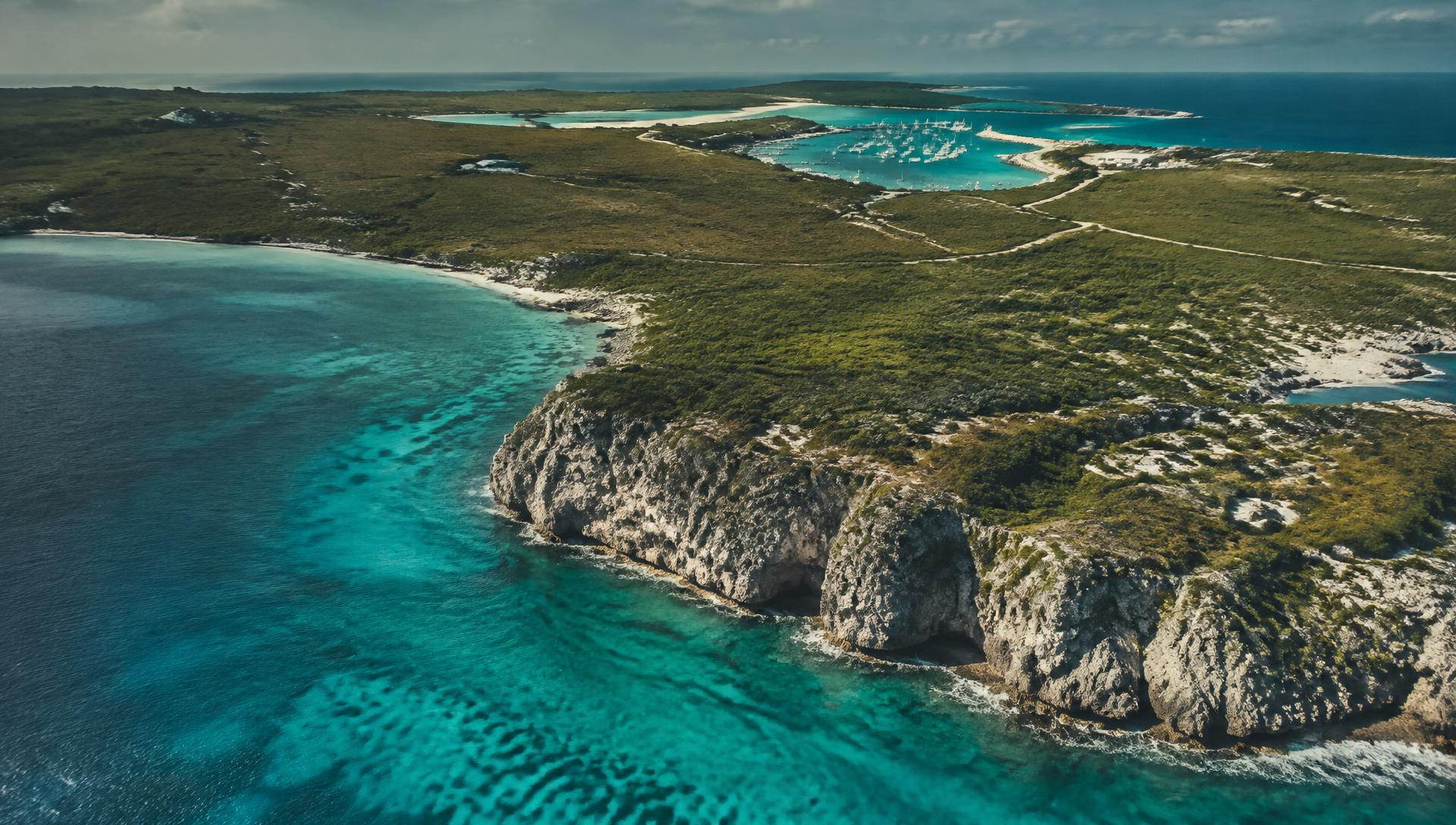
Living between Turks and Caicos and the Dominican Republic has changed the way I think about destination development. Not because either market offers a formula that West Africa should copy, but because they sit within the same region and demonstrate two very different expressions of what tourism can become. One is small, exclusive, expensive and heavily dependent on imported goods, labor and international capital. The other is large, diverse, highly developed as a tourism economy and capable of absorbing millions of visitors through an enormous hospitality ecosystem. Both have extraordinary coastlines. Both are Caribbean destinations. Yet the experience of arriving, staying, investing and living in each is completely different.
That contrast interests me because I am now looking at the Caribbean from another perspective. I am not simply visiting these places. I am living in them while simultaneously working on development opportunities in West Africa. It creates an unusual vantage point. I can experience what happens after a destination has become established while working in markets where the destination story is still being written.
And it has made me wonder: If West Africa could see the Caribbean's future before building its own, what would it choose to repeat—and what would it deliberately do differently?
If West Africa could see the Caribbean's future before building its own, what would it choose to repeat — and what would it deliberately do differently?
Turks and Caicos offers one particularly interesting lesson because the proposition appears almost effortless from the outside. Providenciales has extraordinary water, beautiful beaches, luxury resorts, villas and an international clientele. But living here makes the machinery behind that image much more visible. An island destination is not simply selling beaches. It is supporting an entire economic system required to make those beaches commercially accessible to the world.
Almost everything has to work together. Airlift. Immigration. Roads. Utilities. Food supply. Construction. Hospitality labor. Restaurants. Transportation. Property management. Maintenance. Healthcare. Retail. Security. Waste management. Government policy. Importation. The visitor may experience a week of apparent simplicity, but behind that simplicity is an extraordinarily complicated ecosystem.
That is perhaps the first lesson I would take from the Caribbean to West Africa: tourism is not a hotel industry. It is an ecosystem industry.
Tourism is not a hotel industry. It is an ecosystem industry.
You can build the hotel before the ecosystem exists, but eventually the hotel will expose everything around it that doesn't work. A spectacular property cannot permanently compensate for difficult access, unreliable utilities, poor service infrastructure or a lack of things to experience beyond its boundaries. The destination and the development may be separate investments on paper, but to the guest they are part of the same product.
The Dominican Republic demonstrates the same principle at a completely different scale. Its tourism economy has had decades to develop, and what is particularly interesting is how many layers now sit around the visitor experience. Resorts are only one component. There are airports, highways, restaurants, excursions, residential communities, entertainment, golf, retail, local businesses, international operators, domestic tourism and established supply chains. Tourism doesn't simply occupy a collection of beachfront parcels. It participates in a much larger economy.
That maturity creates an advantage that emerging destinations don't yet have: the next development doesn't have to create the entire market around itself.
In a frontier destination, it sometimes does.
That changes the economics of development considerably. When you're early, you may not simply be developing rooms or residences. You may be participating in the creation of access, perception, service standards, experiences, workforce capability and international confidence at the same time. The first developers carry a burden that later developers often don't. They aren't merely entering a market. In some cases, they are helping prove that the market exists.
But maturity has its own problems, and this is where I think the Caribbean becomes as useful as a warning as it is an example.
Tourism is extraordinarily good at recognizing something desirable and then attempting to reproduce it. A beautiful coastline attracts a hotel. The hotel attracts visitors. Visitors create demand for restaurants and residences. Developers follow. Land values rise. More international brands arrive. More people want access to the place. The cycle appears entirely positive—until the very success of the destination begins changing the qualities that made it desirable in the first place.
Living in Turks and Caicos makes that tension difficult to ignore. The extraordinary natural environment is the foundation of the destination's value. The water, beaches, scale and relative sense of escape are not background scenery; they are effectively economic infrastructure. Yet successful tourism creates constant pressure to build more of everything that monetizes access to those assets.
So where is the line?
How many hotels can a coastline absorb before the experience of the coastline changes? How much development creates vitality, and how much begins creating congestion? When does scarcity create value, and when does development eliminate the scarcity people were paying to experience? At what point does the success of a destination begin consuming its own competitive advantage?
Those are not anti-development questions. I work in development. They are precisely the questions development should be sophisticated enough to ask.
The Dominican Republic raises a different set of questions. Scale has made tourism extraordinarily important, but scale can also create distance between the destination visitors experience and the country in which that destination actually exists. The all-inclusive resort model is brilliant in many ways. It gives the traveler predictability. It concentrates services. It makes budgeting easier. It allows operators to control the guest experience. It has helped destinations accommodate tourism at enormous scale.
But there is a philosophical question hidden inside that success: How much of a country should a visitor have to experience in order to say they experienced the country?
If the airport transfers you to a controlled environment, the resort provides the beach, food, entertainment, shopping and excursions, and then transportation returns you to the airport, the system has succeeded commercially. But has the destination succeeded culturally?
And more importantly for an emerging tourism market: is that the model it should aspire to reproduce?
I don't think there is a universal answer. Different travelers want different things, and different destinations need different tourism products. But West Africa has an advantage precisely because many of these decisions have not yet been made at scale. It can study what happened elsewhere before determining what its own tourism identity should become.
There is another lesson I see every day in the Caribbean: the relationship between tourism and real estate.
Once people fall in love with a destination, some begin wanting a deeper relationship with it. They return more frequently. They stay longer. They rent villas. Eventually some begin asking what it would mean to own something there. Tourism creates familiarity; familiarity reduces psychological distance; and real estate can become an extension of the experience.
Turks and Caicos demonstrates this particularly clearly. Hospitality and residential real estate don't exist in completely separate worlds. The desirability of the destination supports the desirability of ownership, while high-quality residential development can reinforce the destination's positioning.
But there is a warning here too.
When a destination becomes globally desirable, who is the real estate ultimately being built for?
The visitor?
The second-home buyer?
The investor?
The international luxury consumer?
The person who already lives there?
Those groups do not necessarily want or need the same thing.
Successful destination development can create enormous property value while simultaneously making land and housing increasingly difficult for the people required to operate the destination. Hospitality workers, teachers, nurses, restaurant employees, construction workers and young local families still need somewhere to live.
A destination cannot function entirely as a collection of assets for people who don't live there.
That may be one of the most important lessons emerging markets can learn before land values accelerate rather than after.
The same is true of ownership. International capital can be transformative. It can bring investment, expertise, brands, infrastructure and global visibility. But if too much of the tourism economy exists outside the local economy, another question emerges: Who actually becomes wealthier when a destination becomes successful?
Who actually becomes wealthier when a destination becomes successful?
That question deserves more attention in the next generation of tourism markets.
It is possible for visitor arrivals to increase while much of the economic value leaves the destination through foreign ownership, imported goods, international operators and external supply chains. It is also possible for tourism to create local businesses, property ownership, employment, entrepreneurship, creative industries, agriculture, transportation and generational wealth.
The difference is not simply how many tourists arrive.
It is how the tourism economy is designed.
This is where my experience living in the Caribbean increasingly influences how I look at West Africa. I don't believe the objective should be to recreate Caribbean tourism on the African coast. The Caribbean itself isn't one model. Turks and Caicos is not the Dominican Republic. The Dominican Republic is not Barbados. Barbados is not Jamaica. Each destination developed through a different combination of geography, history, access, culture, policy, capital and market positioning.
West Africa will be no different.
And perhaps that is its greatest opportunity.
There is still time in many emerging destinations to ask questions that mature destinations often have to ask retrospectively. What kind of traveler do we actually want? How many visitors can this place absorb without changing what makes it compelling? What should remain public? What should never be built on? How much of the visitor economy should exist outside the hotel? How do local entrepreneurs participate? How do people who live there gain ownership rather than simply employment? How do you welcome international capital without allowing international expectations to erase local identity? What infrastructure should come before development rather than chase it afterward?
And perhaps one of the hardest questions: What does success actually look like?
Is it visitor numbers?
Hotel occupancy?
Luxury room rates?
Foreign investment?
Property appreciation?
International brands?
Or is a successful destination one where those things exist alongside a place that remains culturally recognizable, environmentally desirable and economically meaningful to the people who call it home?
Those objectives are not necessarily incompatible. But neither are they automatically aligned.
That is what mature tourism destinations can teach emerging ones.
The Caribbean proves that tourism can transform economies. It can turn geography into global demand, create extraordinary real estate value, attract international capital and put relatively small places on the world's cultural and economic map.
It also shows that every success creates another decision.
More visitors create demand for more rooms. More rooms create pressure for more workers. More workers require housing and services. More development requires infrastructure. Higher land values create wealth for some and barriers for others. International recognition creates opportunity while increasing the pressure to become what the international market expects.
Eventually, the question stops being simply how to attract tourism.
It becomes how to remain a place worth traveling to once tourism succeeds.
That is the lesson I find myself thinking about while moving between Turks and Caicos and the Dominican Republic and working in West Africa. I can see what mature tourism looks like from inside the destination, not only from a hotel room. I can see what works extraordinarily well, what becomes invisible to the visitor, what becomes expensive to correct later and what may be impossible to recover once it disappears.
West Africa doesn't need to copy the Caribbean.
It has something much more valuable available to it.
The ability to learn from what the Caribbean would do differently if it could begin again.
And perhaps the real advantage of being a frontier destination is not that the world hasn't discovered you yet.
It is that you still have time to decide what you want the world to discover.
Frontier Destinations
Real Estate · Hospitality · Culture · Commercial Strategy
What the Caribbean Can Teach West Africa is part of Annick Timmer's Frontier Destinations series, exploring the intersection of real estate, hospitality, culture and commercial strategy.
Bring this conversation to the stage →