Frontier Destinations
The Next Great Destination Doesn't Exist Yet
By Annick Timmer · · 8 min read
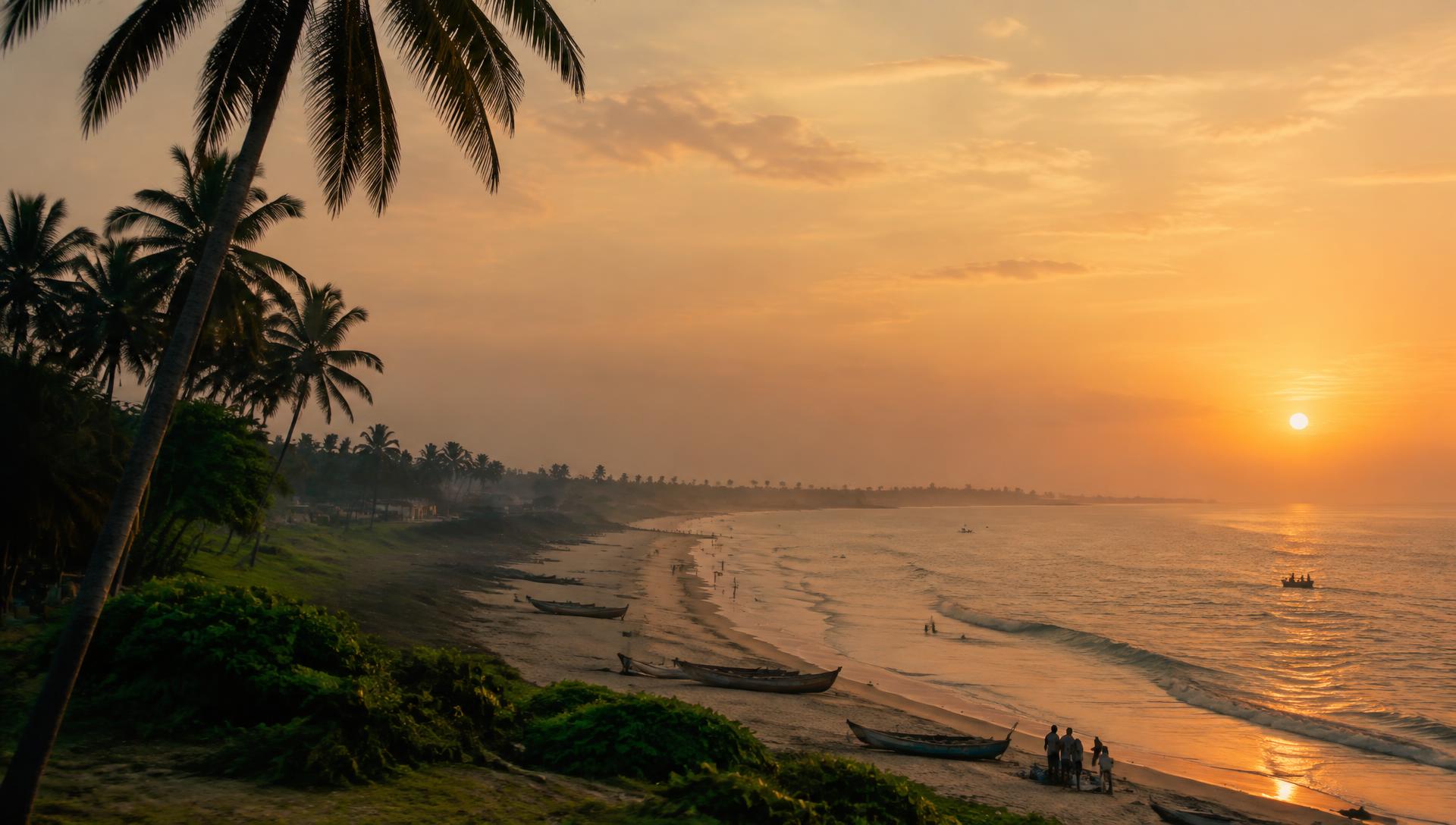
There is a moment in the life of every great destination when it is not yet a destination. It may already have the coastline, the landscape, the culture, the food, the people, the climate, perhaps even the history. What it doesn't have yet is the story the rest of the world understands. I find that moment fascinating, because by the time everyone agrees that a place is desirable, much of the transformation has already happened. The hotels have arrived, the airport has expanded, restaurants have opened, residential values have moved, international brands have entered, and suddenly the destination feels inevitable. But it wasn't. Someone had to see something before everyone else did.
Increasingly, that is the part of real estate and development that interests me most. I have spent much of my career looking at property—what something is worth, who will buy it, how it should be positioned, and what creates demand. But working across different markets changes the questions you begin to ask. At some point, the conversation becomes larger than the property itself. Instead of asking only what is valuable today, you begin asking what creates value tomorrow. And when you work in places where the market is still evolving, you realize that sometimes the most important asset isn't the building. It's the destination around it.
One of the easiest mistakes to make in emerging markets is assuming that natural beauty automatically creates a destination. It doesn't. There are extraordinary coastlines all over the world that receive relatively little international tourism. There are culturally rich cities without meaningful hospitality infrastructure, and spectacular pieces of land that remain exactly that—spectacular pieces of land. A beach is geography. A destination is an ecosystem. The difference between the two is where development becomes interesting.
A beach is geography. A destination is an ecosystem.
People need a reason to arrive, a way to get there, somewhere they want to stay, something meaningful to experience, and ideally a reason to talk about the place after they leave. That involves infrastructure, hospitality, architecture, food, culture, entertainment, transportation, service, residential product and commercial strategy. None of these exists completely independently of the others. You can build a beautiful hotel, but the guest eventually walks outside. You can build exceptional residences, but buyers still want to understand the life surrounding them. You can have extraordinary beaches, but accessibility can determine whether they remain beautiful secrets or become part of an international destination. A hotel can open. A destination has to be created.
My perspective on this didn't begin in West Africa. In many ways, it began through years of working across the Caribbean. The Caribbean is an extraordinary place to understand the economics of geography because islands with seemingly similar natural advantages can develop very differently. Two places can have beautiful water, warm weather and extraordinary coastlines, yet command completely different levels of tourism, investment and real estate demand. The difference is rarely the beach alone. Visitors are purchasing the experience that has been built around it.
Accessibility matters. Hospitality matters. Restaurants matter. Safety and perception matter. Service matters. Architecture matters. Culture matters. The story of the destination matters. Once enough of those elements begin working together, something else starts happening: real estate becomes part of the destination story. Someone visits, returns, stays longer, eventually considers owning something, perhaps invests, perhaps develops, perhaps brings a business. Tourism can gradually become an ecosystem around place.
That relationship between destination and real estate is something I think we underestimate. The industry naturally separates everything into categories—the hotel, the residence, the restaurant, the marina, the development—but the person experiencing a destination doesn't necessarily see those divisions. They experience the place as a whole. A beautiful residence in a place nobody wants to spend time has one value proposition. That same residence within a compelling destination has another.
My work in West Africa has made this question even more interesting to me because it requires letting go of some assumptions that come naturally when you've worked in more established markets. There is a tendency when talking about emerging tourism destinations to immediately compare them to places we already understand. Could somewhere become the next Tulum, the next St. Barts, the next Mykonos or the next Bali? I understand why we do it. Comparisons give investors, travelers and developers an easy reference point. But I think it can also limit the imagination.
The more interesting question is: What could this place become that doesn't exist anywhere else?
West Africa should not have to reproduce the Caribbean, and Liberia should not have to become somebody else's interpretation of luxury. In fact, part of the opportunity is that its international destination identity has not yet been fully defined. That creates obvious complexity, but it also creates possibility. My current work in Liberia has allowed me to look at development from different perspectives, from coastal residential and lifestyle concepts to a much broader hospitality and destination proposition. What has become increasingly clear to me is that there is no universal formula for a frontier destination. What works in an established tourism market cannot simply be imported into an emerging one. The infrastructure is different, the economics are different, the cultural context is different, perceptions are different, and importantly, the first guest may be different too.
That last point deserves more attention. Who actually travels somewhere before everyone else does? The first visitor to an emerging destination isn't necessarily the same person who arrives ten years later when direct flights, established brands and international recognition have made the decision easier. The earlier guest may be more curious, more internationally travelled, less dependent on familiarity and more interested in discovery. They may be willing to exchange some predictability for an experience that feels genuinely new.
I think of this person as the frontier guest, and understanding them changes the development conversation. If you design exclusively for the traveler who expects an emerging destination to behave exactly like an established one, you may be designing for a market that hasn't arrived yet. That doesn't mean compromising on quality. It means recognizing that luxury itself is changing. For some travelers, luxury is no longer defined only by marble, thread count or a familiar hotel flag. It can mean access, privacy, space, culture, discovery and the privilege of experiencing somewhere before everybody else decides they want to be there.
This is also where culture becomes commercially important. One of the risks of developing for an international audience is making everything so internationally recognizable that it becomes interchangeable. The same architecture, the same restaurant concepts, the same imported aesthetic and eventually the same definition of luxury. You could wake up and not know what country you're in. Emerging destinations have an opportunity to resist that. Food, music, art, architecture, materials, landscape, history and local programming shouldn't simply be brought in at the end as decoration. They can be part of what gives the destination its identity in the first place. If we're asking someone to cross an ocean to experience somewhere new, there should be something waiting for them that cannot be experienced exactly the same way somewhere else. Difference isn't necessarily the problem to solve. Difference may be the product.
Difference isn't necessarily the problem to solve. Difference may be the product.
And then, inevitably, I come back to real estate. It is where I entered this conversation, and it continues to shape the way I look at destination development. Real estate value doesn't exist entirely within property lines. People develop emotional relationships with places before they develop relationships with property there. They visit. They return. They begin staying longer. At some point, the question changes from "Where should we stay?" to "What would it be like to have something here?" That transition is significant. It is the moment when a destination becomes more than somewhere someone consumes temporarily and begins becoming somewhere they can imagine belonging.
This is why I often come back to the idea that real estate follows experience. Not automatically, not immediately, and certainly not without risk. But experience can create attachment, attachment can create demand, and demand can eventually create an entirely different conversation around property. That is why developers working in emerging destinations have to think beyond the individual asset. The success of the building and the success of the place around it can become deeply connected.
None of this means frontier development is easy. Quite the opposite. Infrastructure can be incomplete, construction difficult, financing more complicated and supply chains challenging. International perception may lag behind reality. Air access matters enormously. Government policy matters. Local partnerships matter. Service ecosystems need time to develop. Development that excludes local communities can also undermine the very identity that made the destination interesting in the first place. I don't use the word frontier as shorthand for easy opportunity. I use it to describe places where the destination proposition is still being formed.
That distinction matters because opportunity and responsibility arrive together. The question cannot simply be how quickly value can be extracted from a place. The more interesting question is what needs to exist there for value to endure. What should be preserved? What needs to be created? What infrastructure unlocks everything else? Which visitor should come first? What belongs in the destination, and perhaps just as importantly, what doesn't?
There is a particularly interesting period before international attention becomes consensus—before every hospitality company has a development team looking at the market, before institutional capital becomes comfortable, before the luxury brands arrive and before the destination becomes obvious. At that stage, traditional data may only tell part of the story. You have to pay attention to other signals: who is already traveling there, what infrastructure is changing, where diaspora capital is moving, which cultural movements are gaining international attention, what younger travelers are searching for, and what already exists locally that deserves to be amplified rather than replaced.
This requires imagination, but it also requires discipline. There is a difference between identifying possibility and manufacturing hype. Not every beautiful coastline becomes a global destination. Not every emerging market will follow the trajectory people imagine for it. There are real risks, real constraints and real reasons some places develop faster than others. That uncertainty is precisely why I find this stage so compelling. You're not simply studying what a market has become. You're trying to understand the forces that might shape what comes next.
When I look at the Caribbean today, I see destinations at very different stages of maturity. When I look at West Africa, I see another landscape entirely, with its own opportunities, challenges, cultures and development realities. I don't think the objective should be predicting which place becomes "the next" somewhere else. I am much more interested in how a place becomes the first version of itself.
I am much more interested in how a place becomes the first version of itself.
Somewhere right now there is a coastline, a city, an island or a community that most international travelers have never seriously considered. It may not have the famous hotel yet. It may not have the direct flight, the restaurant everyone wants a reservation at, the luxury residences or even a story that the international market understands. But some of the ingredients may already be there.
And someone is looking at that place and asking a different question—not simply, "What is here?"
But what could exist here?
That, to me, is where the next great destination begins.
Frontier Destinations
Real Estate · Hospitality · Culture · Commercial Strategy
The Next Great Destination Doesn't Exist Yet is part of Annick Timmer's Frontier Destinations series, exploring the intersection of real estate, hospitality, culture and commercial strategy.
Bring this conversation to the stage →