Frontier Destinations
Culture Is Infrastructure
Why food, music, art, architecture and local identity are fundamental components of destination development — not decoration.
By Annick Timmer · · 6 min read
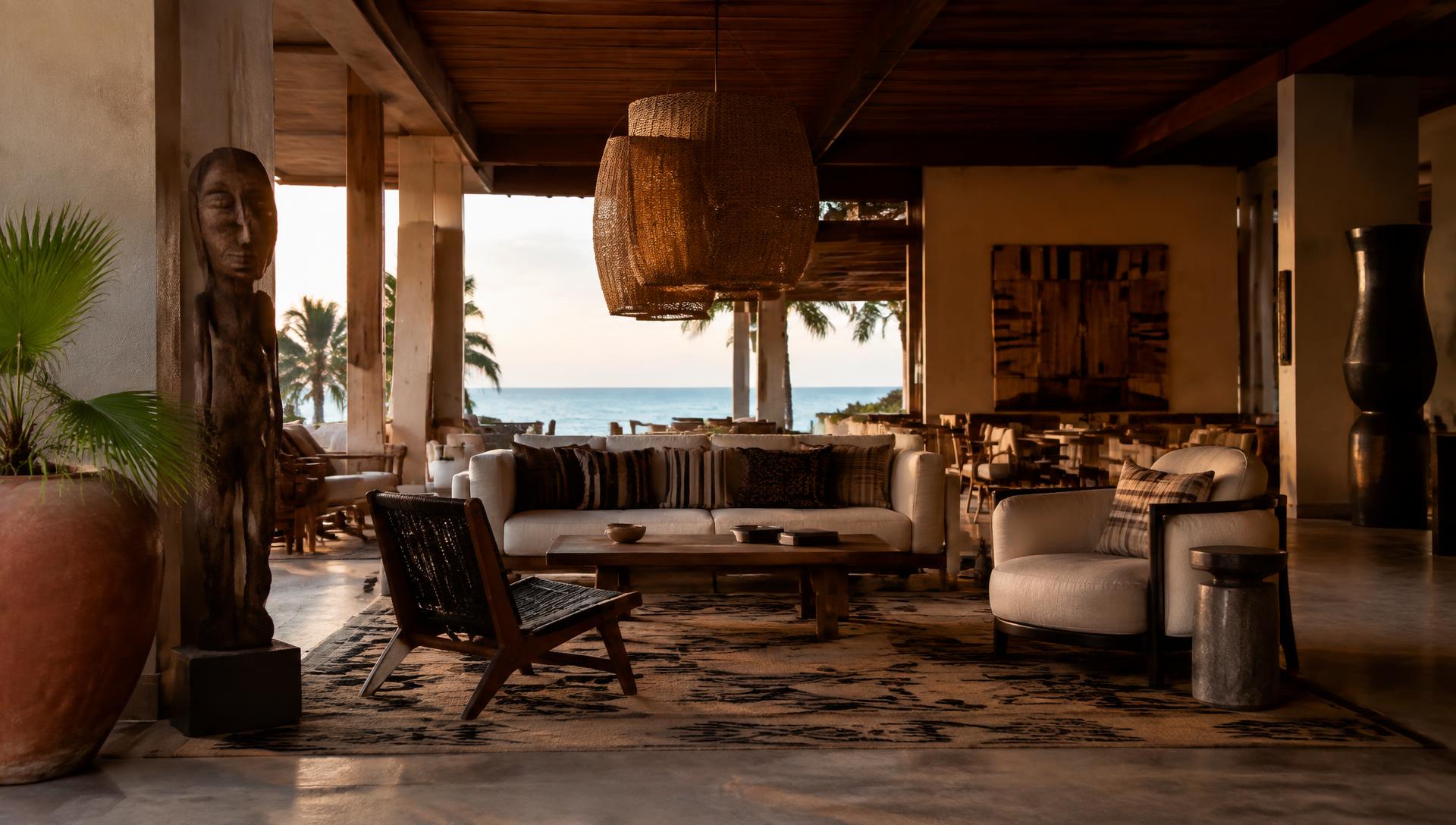
There is a strange contradiction in destination development. We search the world for places that feel undiscovered, distinctive and culturally rich, and then, once we find them, we often begin removing the very differences that made them interesting.
We improve the infrastructure. We introduce international hospitality standards. We design for a global consumer. We bring in recognizable brands, familiar restaurants and architecture that communicates a universally understood version of luxury. Individually, many of those decisions make sense. Collectively, however, they raise a question I think developers should be asking far more often: At what point does making a destination internationally accessible begin making it internationally interchangeable?
At what point does making a destination internationally accessible begin making it internationally interchangeable?
We tend to think about infrastructure as the things a destination needs in order to function. Airports. Roads. Electricity. Water. Telecommunications. Hotels. Without them, tourism cannot develop meaningfully at scale. But infrastructure only answers part of the equation. It can explain how someone gets somewhere and where they sleep once they arrive. It doesn't necessarily answer the most important question of all.
Why here?
Why cross an ocean for this coastline rather than another? Why choose this city over dozens of others? Why return? Why tell someone about it? Why eventually consider buying a home there, investing there or becoming part of the place?
The answers are often found in things we don't classify as infrastructure at all.
The meal you still remember five years later. The music you heard coming from somewhere you hadn't planned to go. The architecture that couldn't belong anywhere else. The artist whose work introduced you to a history you didn't know. The neighborhood that made you abandon your itinerary. The people, rituals, sounds and imperfections that made you feel that you had actually gone somewhere.
We call these things culture.
And then, strangely, we often treat them as decoration.
Culture gets discussed after the master plan. Art gets selected for the walls. A local dish appears on the menu. Music becomes entertainment programming. Architecture borrows a few visual references from the region. We congratulate ourselves for creating a "sense of place."
But a sense of place cannot simply be installed.
That is where I think the conversation around destination development needs to change. Culture isn't something a development gives to a destination. It is something the destination already has. The question is whether development recognizes its value early enough to protect it, amplify it and allow it to evolve.
Because culture has economic consequences.
A restaurant can be an amenity, or food can become one of the reasons people travel to a country.
Music can be entertainment in a hotel lobby, or it can shape the international identity of an entire city.
Art can decorate a development, or it can change how the world perceives a place.
Architecture can provide rooms, or it can become part of the reason people want to experience the destination at all.
Those are very different propositions.
And perhaps the difference comes down to whether we see culture as something that supports tourism or something capable of creating demand for tourism.
That distinction becomes particularly important in emerging destinations. Established destinations already have stories the international market understands. A traveler has an idea of what Paris, Ibiza, St. Barts or Marrakech represents before arriving. Frontier destinations don't necessarily have that advantage. Their international identity may still be forming.
That could be perceived as a weakness.
I increasingly see it as an opportunity.
A place whose international identity has not yet been completely defined has the rare opportunity to decide what it does not want to become.
That may be just as important as deciding what to build.
My experience across the Caribbean and my more recent work in West Africa have made me think about this often. There is enormous value in studying established tourism markets. We should understand what they did well, what created demand, what attracted hospitality brands, what supported residential development and what eventually produced internationally recognizable destinations.
But learning from a place and reproducing it are two very different things.
West Africa does not need to become the Caribbean with a different coastline. Liberia does not need someone else's interpretation of luxury transplanted onto its shores. And the next generation of destinations does not need to resemble the last generation in order to succeed.
Perhaps the more interesting opportunity is to ask what these places can become precisely because they are different.
That question also changes how we think about luxury. For decades, international luxury hospitality often relied on consistency. Familiar standards reduced uncertainty. A guest could travel thousands of miles and still recognize the experience.
But what if the sophisticated traveler increasingly wants the opposite?
What if luxury is becoming less about insulation from a destination and more about privileged access to it?
Access to a table you couldn't recreate in London or Miami. Access to musicians you hadn't heard before. Access to architecture responding to the climate rather than fighting it. Access to artists, landscapes, stories and communities that could not simply be relocated to another resort.
Then difference isn't a liability that development needs to correct.
Difference becomes the asset.
Difference becomes the asset.
There is another reason this matters. When culture becomes part of the destination economy rather than decoration around it, tourism has the potential to create value beyond the walls of the hotel.
A visitor eating locally creates a different economic relationship with a destination. So does attending a performance, buying work from an artist, visiting a gallery, discovering a neighborhood, hiring a guide, attending a festival or returning because of an experience that no single resort owns.
The destination itself begins participating in the economics of tourism.
That raises another uncomfortable question: Are we building destinations, or are we building developments that happen to be located in interesting places?
Are we building destinations, or are we building developments that happen to be located in interesting places?
Those are not the same thing.
A successful resort can theoretically keep almost everything inside its gates. A successful destination cannot. It requires an ecosystem. Some of the most memorable experiences have to exist beyond the control of any single developer.
And that requires a different kind of confidence.
It means accepting that not every experience needs to be programmed, branded or monetized by the development itself. Sometimes the role of development is to create the conditions in which other people can create value.
Chefs. Artists. Musicians. Designers. Entrepreneurs. Craftspeople. Local businesses. Communities.
Their participation doesn't simply make a destination more authentic. It makes it more difficult to replicate.
That may become increasingly valuable in a world where almost everything else can be copied.
There is also a danger here. The moment culture becomes commercially valuable, there is a temptation to package it. Authenticity itself becomes a product. Local identity gets polished until it becomes comfortable enough for visitors to consume.
And eventually something strange happens.
The destination begins performing a version of itself.
That is why I don't think the answer is simply "more local culture." The harder question is who gets to decide which parts of a culture are presented, preserved, changed or commercialized — and who benefits when they are.
Those aren't branding questions.
They are development questions.
They affect the identity of the place being created and the relationship between the people who already belong there and the people being invited into it.
This is especially consequential in frontier destinations because early development decisions can shape what follows. The first major hotels, residences, restaurants and cultural spaces don't simply enter the market. They can begin defining the market.
Which means the responsibility is greater.
Before asking what should be added to a place, perhaps we should first understand what is already there.
What should never disappear?
What deserves a larger stage?
What could evolve without losing its meaning?
What should remain imperfect?
And what might the world travel there specifically because it cannot find anywhere else?
I don't think the next great destinations will necessarily be the places with the most expensive hotels or the largest developments. They may be the places that understand something much more difficult to manufacture:
a reason to matter.
Roads can take us there. Airports can connect us to them. Hotels can give us somewhere beautiful to sleep.
But none of those things, by themselves, make us care about a place.
Culture does something infrastructure alone cannot.
It turns geography into identity.
And perhaps the most important question for anyone building the next generation of destinations is not simply what are we going to build here?
It is:
What is already here that we cannot afford to build over?
Frontier Destinations
Real Estate · Hospitality · Culture · Commercial Strategy
Culture Is Infrastructure is part of Annick Timmer's Frontier Destinations series, exploring the intersection of real estate, hospitality, culture and commercial strategy.
Bring this conversation to the stage →